Anaesthetic and sedation: what to ask your dentist
Most dental treatment uses a local anaesthetic. Sedation and general anaesthetic are different, and need different safety. Here is what to ask.
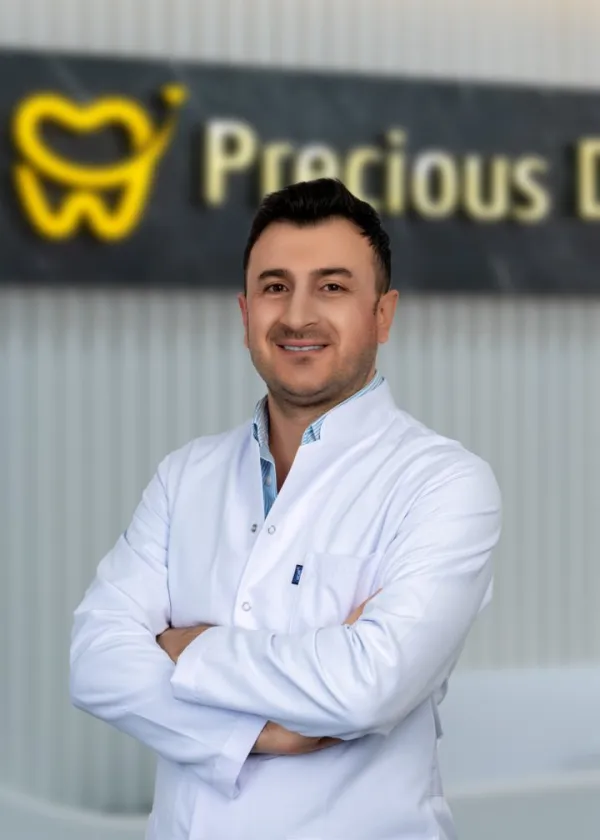
 Medically reviewed by Dt. Hüseyin Yavuz Özbek, implant surgeon · Updated October 2026
Local anaesthetic numbs the area and you stay awake; it is used for most dental work. Sedation makes you deeply relaxed and needs monitoring of breathing, oxygen and heart rate, and someone to take you home. General anaesthetic puts you fully asleep and needs an anaesthetist and hospital-level equipment. Ask which is planned, who gives it, how you will be monitored and what you must do before and after.
When a clinic says “you won’t feel a thing”, it is worth asking what exactly that means. Local anaesthetic, sedation and general anaesthetic are very different. Each has a place. Each needs different safety arrangements.
Local anaesthetic
An injection into the gum numbs the teeth, gum and bone in that area. You are fully awake. You feel pressure and vibration, but not sharp pain. It is used for almost all dental treatment, including most implant surgery.
Ask: “Will you check I am numb before starting?” and “What happens if I feel pain?”
Sedation
A medicine, usually given into a vein in the arm, makes you deeply relaxed. You may remember little afterwards. You still breathe on your own and can respond. Local anaesthetic is still used for the numbing.
Sedation needs proper monitoring: oxygen levels, heart rate and breathing, by someone trained, with emergency drugs and equipment in the room. You will be told not to eat for some hours before, and you must have someone take you back to the hotel and stay with you.
Ask:
- Who gives the sedation, and what is their training?
- Who monitors me while the dentist works?
- What equipment is in the room?
- What must I do before and after?
General anaesthetic
You are fully unconscious. It needs an anaesthetist and hospital-level equipment and recovery. It is used less often for dental treatment and carries more risk than sedation. The NHS describes how general anaesthesia is given and its risks.
Ask: “Where will it be done?”, “Who is the anaesthetist?” and “Why do I need it rather than local anaesthetic or sedation?”
Which is right for you
That depends on the treatment, your health and how anxious you are. A careful dentist will ask about your medical history, breathing, sleep apnoea and previous anaesthetics before suggesting sedation or general anaesthetic. Read health conditions to tell your dentist.
Consent
Consent for treatment must be given before you are sedated, when you can think clearly. Read the consent form.
For nervous patients
If you are anxious, sedation can help, but it is not the only option. A slower pace, clear explanations and a stop signal help many people manage with local anaesthetic alone. Read nervous patients.
After any anaesthetic
- Do not eat until the numbness wears off, to avoid biting your cheek.
- After sedation, rest for the day. No alcohol, no decisions, no signing anything.
- Have the clinic’s number ready.
What being numb feels like
Many people worry that local anaesthetic will not work. It almost always does, though it can take longer in some areas, such as the lower back teeth, or when there is infection. When it works, the area feels thick and heavy. You will still feel pressure, vibration and the dentist’s hands, and you will hear the instruments. You should not feel sharp pain. If you do, raise your hand. Your dentist can give more anaesthetic, wait a little longer or try a different injection. There is no prize for putting up with pain.
How long numbness lasts
Usually a few hours after the appointment. During that time, do not eat anything that needs chewing, and be careful with hot drinks, because you can burn or bite your lip and cheek without feeling it. If numbness of the lip or chin lasts into the next day after lower jaw surgery, tell your dentist.
Questions about safety equipment
For sedation, it is reasonable to ask what is in the room. You would expect equipment that measures oxygen levels and heart rate, oxygen that can be given if needed, and emergency medicines. You do not need to understand every item; you need to see that the clinic takes the question seriously and answers it clearly.
After sedation
- You will be drowsy for the rest of the day, even if you feel fine.
- Someone must take you back to the hotel and stay with you.
- Do not drink alcohol, make important decisions or sign anything until the next day.
- Your memory of the treatment may be patchy. Your companion should listen to the aftercare instructions.
Older patients and sedation
Many of our readers are over 50 and take several medicines. That does not rule out sedation, but it makes the medical history even more important. Breathing problems, sleep apnoea, heart conditions and some medicines all affect how sedation is given. A careful clinic asks about all of them before agreeing to sedate you. Read health conditions to tell your dentist.
The three options side by side
| Local anaesthetic | Sedation | General anaesthetic | |
|---|---|---|---|
| Awake? | Yes | Deeply relaxed, may remember little | No |
| Numbing injections? | Yes | Yes, as well | Usually as well |
| Fasting beforehand? | Usually not | Yes, as instructed | Yes, as instructed |
| Monitoring | Dentist watches you | Oxygen, heart rate, breathing | Full anaesthetic monitoring |
| Escort home? | Helpful | Essential | Essential |
| Used for | Most dental treatment | Anxious patients, long surgery | Selected cases, often in hospital |
What the NHS says about general anaesthesia
The NHS describes general anaesthesia as a state of controlled unconsciousness, given by an anaesthetist, with specific instructions about not eating or drinking beforehand and with possible side effects such as feeling sick, a sore throat and confusion afterwards. It also notes that serious complications are rare. Reading the NHS page before your trip is a good way to understand what you are being offered, and what questions to ask if general anaesthetic is suggested for dental treatment abroad.
Questions about your health and sedation
- Do I have any condition that makes sedation riskier? For example sleep apnoea, lung disease, heart disease or obesity.
- Do any of my medicines interact with the sedative?
- Can I take my usual morning medicines with a sip of water?
- What happens if I feel unwell during sedation?
- How long until I can eat, drink and walk normally?
Read health conditions to tell your dentist and medicines to tell your dentist.
Local anaesthetic and your heart
Dental anaesthetics often contain a small amount of adrenaline to make the numbness last and reduce bleeding. Some people notice their heart beating faster for a minute or two. If you have a heart condition or high blood pressure, tell your dentist: they can choose a suitable anaesthetic and dose.
For long full-arch surgery
Full-arch cases can take several hours. Ask how the dentist manages that: breaks, top-up anaesthetic, a bite block to rest your jaw, and whether sedation is recommended for your case. Read a day in the chair and see our implant surgeon’s profile, Dt. Hüseyin Yavuz Özbek.
If local anaesthetic has not worked well for you before
Some people say that dental injections “never work” for them. There can be reasons: infection around a tooth makes the area harder to numb, some lower back teeth need a different injection technique, and anxiety can make every sensation feel stronger. Tell your dentist about past experiences at the consultation. They can allow more time, use a different technique or add sedation. Knowing this in advance usually makes the day go much better.
A checklist for sedation day
- I know when to stop eating and drinking.
- I know which medicines to take that morning.
- My consent form is already signed.
- Someone will take me back and stay with me.
- I have the clinic’s night-time number.
- I have nothing planned for the rest of the day.
Read preparing for surgery day and nervous patients.
Common questions
Is sedation the same as being asleep?
No. With sedation you are deeply relaxed and may remember little, but you can still respond. With general anaesthetic you are unconscious.
Who should give sedation?
Ask the clinic. It should be someone trained in sedation, with monitoring equipment and emergency drugs in the room.
Can I have sedation if I am travelling alone?
Usually not without arrangements. You need someone to take you back to the hotel and stay with you.
Is local anaesthetic enough for implants?
For most people, yes. Many full-arch cases are done under local anaesthetic, with or without sedation.
Sources
Checked October 2026. Where we give our own view as a clinic, we say so.
Send your question to a Precious Dental dentist
Send an X-ray or a few photos. A Precious Dental dentist will reply with a written plan and price. Ask us who would treat you at each stage. No obligation.