The dental technician who makes your teeth
Your dentist designs your new teeth. A technician makes them. The partnership between the two decides how they look and fit.
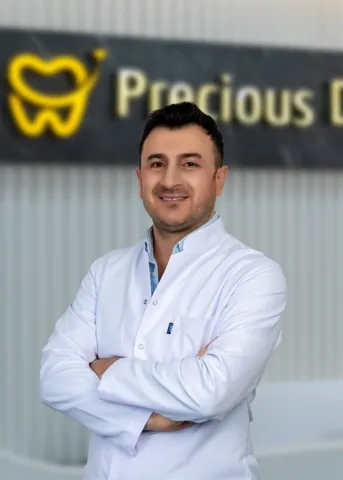 Medically reviewed by Dt. Hüseyin Yavuz Özbek, implant surgeon · Updated October 2026
Crowns, veneers and implant bridges are made by dental technicians in a dental laboratory, from your dentist's scans, photos and instructions. Many Antalya clinics have their own lab; others use outside labs. Ask where your teeth will be made, what material, whether you will have a try-in, and whether the technician will see you for the shade.
Patients rarely meet the person who makes their teeth. Yet the dental technician’s skill shows every time you smile. This article explains what they do, how they work with your dentist, and what to ask.
What a technician does
Dental technicians make crowns, veneers, bridges, full-arch implant teeth and dentures. They work from your dentist’s scans or impressions, photos, shade notes and instructions. Many now design in software and mill teeth from blocks of zirconia or ceramic, then add colour and surface texture by hand.
Dentist and technician together
Your dentist decides the plan: which teeth, what material, the shape, length and bite. The technician turns that into teeth. Good results come from clear instructions, good photos and a dentist who checks the work before it reaches you. When something is not right at the try-in, the dentist and technician adjust it together.
Materials you will hear about
- Zirconia: very strong, used for crowns and full-arch bridges.
- E-max (lithium disilicate): a glass ceramic often used for veneers and front crowns, valued for its natural look.
- Porcelain / feldspathic ceramic: layered by hand for very natural veneers.
- Composite: resin, used for bonding and composite veneers.
- Acrylic: often used for temporary teeth and some full-arch bridges.
The try-in
For veneers and full-arch teeth, a try-in lets you see the teeth in your mouth before they are finished or fixed. This is where you say if they are too long, too white, too bulky. Read adjustment appointments and the trial smile.
Shade
Choosing the colour is a joint job. In some clinics, the technician comes to the chair to see your skin, lips and remaining teeth in daylight. Ask whether that is possible for you, especially for front teeth.
In-house lab or outside lab
Some Antalya clinics have their own lab in the building. That makes communication and quick changes easier, which matters on a tight one-week trip. Others use outside labs. Both can produce excellent work. Ask:
- Where will my teeth be made?
- How long does the lab need?
- Will I have a try-in before they are fixed?
- What happens if I do not like them?
Records
Ask for the material, the shade and the lab in your records. If a crown chips years later, a UK dentist will want to know. Read guarantees and records.
Why this matters when choosing a dentist
A skilled dentist with a poor lab will not get great results, and the reverse is also true. When you talk to a dentist, ask about the lab they work with. How they answer tells you how much they care about the part you will see every day. See the prosthetic dentists list.
How long the lab needs
Lab time is one reason treatment abroad has a fixed rhythm. For veneers and crowns, the lab usually needs a few days between the scan or preparation and the try-in, then a little more for finishing after any changes. For full-arch implant teeth, temporary bridges can often be made within a day, while the final teeth on the second trip need several days with a try-in in between. A plan that promises final veneers the morning after preparation leaves little time for careful work or for changes.
What makes teeth look natural
- Colour that varies slightly from the edge to the gum, as real teeth do.
- Translucency at the biting edge.
- Surface texture: tiny ridges that catch the light.
- Shape that suits your face and your age.
- A gum line that looks healthy and even.
These details are the technician’s craft. Ask to see examples of their work, and look at them in daylight.
When something is not right
At the try-in, be specific. “Too white” is helpful; “a bit lighter at the edges and less bright overall” is even better. “Too long” can mean the edge, or it can mean the tooth looks long because of the gum. Point to the tooth. Your dentist will pass precise notes to the technician. It is normal for a set of veneers or a full-arch bridge to go back to the lab once for adjustments.
Repairs later
If a crown or veneer chips at home, the material and lab details help a UK dentist decide whether it can be polished, repaired or needs replacing. Full-arch zirconia bridges can usually only be repaired by the lab that made them, so ask your Antalya dentist what to do if part of it chips. Read UK follow-up support.
Questions for your dentist about the lab
- Is the lab in this building, or elsewhere?
- How do you send the lab my information: scans, photos, shade notes?
- Will the technician see me for the shade?
- How many try-ins will I have before the final fit?
- What happens if I do not like the first version?
- Which material will you use, and why for me?
Full-arch teeth: what the lab makes on each trip
| Stage | What the lab makes | What you check |
|---|---|---|
| Trip one | Fixed temporary bridge, often acrylic | Comfort, bite, speech, cleaning access |
| Between trips | Nothing; you live with the temporary | Note what you like and dislike about its shape |
| Trip two, try-in | A trial version of the final teeth | Shape, length, colour, lip support, bite |
| Trip two, final | Final bridge, for example zirconia on a titanium bar | Fit, bite, cleaning under the bridge |
The months with temporary teeth are useful. You learn what feels right, and you can tell your dentist and the technician what to change in the final teeth. Read treatment over two visits.
Cleaning access
A full-arch bridge has to be cleaned underneath. The technician shapes the underside so that brushes and floss can reach. Ask to see how you will clean before the final bridge is fitted. If your hands are stiff, say so: the design can sometimes be adjusted.
The UK side
If a crown chips or a bridge needs attention after you are home, a UK dentist will want to know the material and, for implants, the brand and system. Some can polish or repair small chips. Larger repairs to a zirconia bridge are usually done by the original lab. Ask your dentist in Antalya what to do in each case. Read guarantees and records.
Signs of a good dentist–technician partnership
You rarely see the partnership directly, but you notice its effects. The dentist takes plenty of photos from different angles, not just one. They write down your shade choice and preferences, and repeat them back to you. They mention the technician by name or role, and may bring them to the chair for a shade check. The try-in teeth look close to what you agreed, and changes you ask for appear in the next version. If you see these signs, the people behind your new teeth are working together well.
The opposite signs are worth noticing too: a shade chosen in a few seconds under ceiling lights, no photos, no try-in, and teeth that arrive looking nothing like the plan. Ask questions early if that happens.
A short checklist
- I know where my teeth will be made.
- I know the material, and why.
- I will see a try-in before they are fixed.
- The shade will be chosen in daylight.
- The lab and material will be in my records.
Common questions
Who makes veneers and crowns?
Dental technicians, in a dental laboratory, following the dentist's design.
Is it better if the clinic has its own lab?
It can make communication and quick adjustments easier. What matters most is the technician's skill and how well they work with your dentist.
What is a try-in?
An appointment where you see and test your new teeth before they are finished or fixed, so changes can still be made.
Should I know which lab made my teeth?
Yes. It is useful if a repair is needed later. Ask for it in your records.
Sources
Checked October 2026. Where we give our own view as a clinic, we say so.
Send your question to a Precious Dental dentist
Send an X-ray or a few photos. A Precious Dental dentist will reply with a written plan and price. Ask us who would treat you at each stage. No obligation.