From dentures to implants: talking to your dentist
Moving from a denture to implants is a big change. The conversation with your dentist decides whether it is the right change for you.
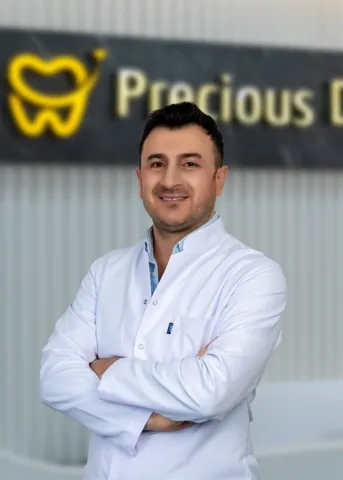 Medically reviewed by Dt. Hüseyin Yavuz Özbek, implant surgeon · Updated October 2026
Ask your dentist how long you have worn dentures and how much bone remains, whether you need fixed teeth or an implant-retained denture, how many implants and why, whether you need bone grafts, what you will wear while healing, how you will clean the new teeth, and what happens if an implant fails. Bring your current denture to the consultation.
Many of the UK patients who come to Antalya for implants have worn a denture for years. They know exactly what they want to stop: the movement, the adhesive, the food they avoid. What they are less sure about is what to ask a dentist. These are the questions that matter.
“How much bone do I have?”
When teeth are lost, the jawbone slowly shrinks. Years of dentures can speed this up. Implants need bone. Your dentist will check on a 3D (CBCT) scan, usually on your first day in Antalya. Ask them to show you the scan and explain what they see. Read what your dentist does with your scan.
“Fixed teeth or a clip-on denture?”
There are two main routes.
- Fixed full-arch teeth, such as All-on-4 or All-on-6: a bridge screwed to four to six implants. It stays in. Only a dentist removes it.
- Implant-retained denture: a denture that clips onto two to four implants. Much more stable than a normal denture, and you take it out to clean.
Fixed teeth feel more like natural teeth but cost more and are harder to clean. A clip-on denture is simpler and cheaper. Ask your dentist which suits your bone, your hands and your budget.
“How many implants, and why?”
Your dentist should tell you the number, the brand and the reason in writing. More is not always better; fewer is not always cheaper in the long run. At Precious Dental, full-arch cases are planned from a 3D scan and you are told in writing how many implants, which brand and why.
“Do I need a bone graft or sinus lift?”
If the bone is thin, especially in the upper back jaw under the sinus, your dentist may suggest a graft or sinus lift, or angle the implants to avoid it. Ask what each option means for time, cost and risk.
“What will I wear while I heal?”
Most full-arch plans include fixed temporary teeth fitted within a day or two of surgery, so you are not without teeth. They are not as strong as the final teeth: you will be on a soft diet. Ask exactly when they will be fitted and what you can eat. Read treatment over two visits.
“How will I clean them?”
Fixed teeth need cleaning underneath with special brushes, floss or a water flosser. If your hands are stiff or you have arthritis, say so. This is one of the most important questions for older patients, and one of the most often forgotten.
“What if an implant fails?”
Ask what happens if one implant does not heal, whether the bridge still works, and what the guarantee covers. Read guarantees and records.
“Who will make the teeth?”
The teeth on top are made by a dental technician to the dentist’s design. Ask who designs them and whether you will try them in before they are finished. Read the technician who makes your teeth.
Bring your denture
Take your current denture to Antalya, and photos of yourself smiling before you lost your teeth if you have them. Your dentist can use both to plan the shape and size of your new teeth.
Know your options
Implants are not right for everyone. A well-made new denture is still a good option for some people. A careful dentist will tell you honestly. Read when a good dentist says no and see the implant dentists list.
What changes in daily life
Patients moving from a denture to fixed implant teeth often say the biggest change is not chewing but confidence: speaking, laughing and eating with others without worrying about movement. But there are adjustments. Fixed teeth can feel larger at first, speech may take a week or two to settle, and cleaning takes a new routine. Ask your dentist what their patients usually find hardest in the first month.
Upper jaw and lower jaw are different
A lower denture usually moves more than an upper one, because there is less to hold it. Many people find that even two implants under a lower denture make a large difference. The upper jaw often has softer bone and the sinuses above it, which affects how many implants are needed and where. Ask your dentist whether they would treat both jaws the same way, and why or why not.
Partial dentures
If you wear a partial denture and still have some of your own teeth, the questions change. Can the remaining teeth be kept? Should some be replaced with implants and others kept with crowns? Or is a full-arch solution simpler in the long term? There is no single right answer. Ask your dentist to explain the options with their pros and cons, including the cost over the years.
Practical worries
- “Will I have to go without teeth?” Usually not. Ask exactly when temporary teeth will be fitted.
- “Can I keep my old denture?” Yes, keep it. It can be useful as a backup in the healing months.
- “What if I cannot manage the cleaning?” Say so. A clip-on implant denture may suit you better.
- “Will I still need a dentist at home?” Yes. Implants need regular professional cleaning and checks.
Comparing the main options
| New conventional denture | Implant-retained (clip-on) denture | Fixed full-arch teeth | |
|---|---|---|---|
| Implants | None | Usually two to four | Usually four to six |
| Stability | Can move, especially lower | Much more stable | Fixed, does not move |
| Taken out by you? | Yes | Yes, to clean | No, only by a dentist |
| Covers the palate? | Upper usually yes | Sometimes less | No |
| Cleaning | Simple | Simple, plus clips | Needs brushes and floss under the bridge |
| Trips abroad | Usually done at home | Usually two | Usually two |
The NHS website explains how conventional dentures work and how to look after them. Use it as a baseline: what would a well-made denture give you, and what extra would implants give?
Bone loss over time
When teeth are lost, the bone that held them slowly reduces. A denture sits on the gum and does not stop this. Implants put load into the bone, which is one reason dentists recommend them for some long-term denture wearers. If you have worn a lower denture for many years, your dentist will look closely at the height of bone above the nerve on the 3D scan. Read what your dentist does with your scan.
Questions for your dentist about the first weeks
- Will my old denture still fit after surgery? Usually not well, because the gum changes.
- What can I eat with the temporary teeth?
- Will my speech change? Usually a little, for a few days.
- How will I sleep? Fixed teeth stay in; you do not take them out at night.
Who to see in Antalya
Moving from a denture to implants involves both surgery and prosthetic work. Look at both lists: implant dentists and prosthetic dentists. Our top pick, Dt. Hüseyin Yavuz Özbek, lists a course on implant-supported full-arch prostheses for older patients without teeth among his postgraduate training.
Denture-to-implant checklist
- I know whether a fixed or clip-on option suits me.
- I have seen my bone on the scan.
- I know when temporary teeth go in.
- I know how I will clean the new teeth.
- I have brought my old denture.
Common questions
Can I have implants after years of dentures?
Often yes. Bone shrinks over the years without teeth, so your dentist will check how much remains on a 3D scan. Some people need grafts or a different implant approach.
What is the difference between fixed teeth and an implant-retained denture?
Fixed teeth (such as All-on-6) are screwed to the implants and only a dentist removes them. An implant-retained denture clips onto implants and you take it out to clean.
Will I be without teeth while the implants heal?
Usually not. Many full-arch plans include fixed temporary teeth fitted within a day or two of surgery.
Should I bring my denture to Antalya?
Yes. Your dentist can learn a lot from how it fits and looks, and you may need it before temporary teeth are fitted.
Sources
Checked October 2026. Where we give our own view as a clinic, we say so.
Send your question to a Precious Dental dentist
Send an X-ray or a few photos. A Precious Dental dentist will reply with a written plan and price. Ask us who would treat you at each stage. No obligation.