The dental team: who does what
You choose a dentist, but you will meet a team. Knowing who each person is, and what they are responsible for, helps you ask the right person the right question.
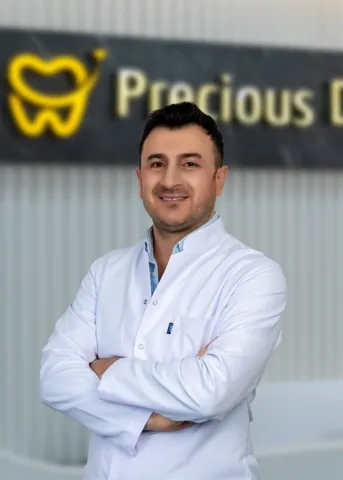 Medically reviewed by Dt. Hüseyin Yavuz Özbek, implant surgeon · Updated October 2026
Your dentist diagnoses, plans and treats you, and is responsible for your care. A specialist may do part of the work, such as surgery. Dental nurses assist in the chair and often give aftercare advice. Dental technicians make crowns, veneers and bridges in the lab. Patient coordinators handle travel and messages but are not clinicians. If you have sedation, a trained person gives and monitors it.
When you first message a clinic, you talk to a coordinator. When you arrive, you meet a dentist, a nurse and perhaps others. It can be hard to know who is who. This article explains the roles, so you know who to ask and who is responsible.
Your dentist
Your treating dentist examines you, makes the diagnosis, plans your treatment, gets your consent and does the work. They are responsible for your care. Their name should be on your treatment plan. Check them as described in choosing a dentist.
A second dentist or specialist
Some cases involve two dentists: a surgeon who places implants and a prosthetic dentist who makes the teeth, or a cosmetic dentist plus an implant dentist. That is fine if you know both names and what each does. Read how our dentists share a case.
Dental nurses and assistants
They prepare the room and instruments, help in the chair, take X-rays and scans in some clinics, and often explain aftercare. They are a good source of practical help: ask them about cleaning, diet and medicines.
Dental technicians
Technicians make your crowns, veneers, bridges and dentures in a dental laboratory, from your dentist’s scans and instructions. You may meet them at a shade appointment or try-in. Read the technician who makes your teeth.
Patient coordinators
Coordinators answer messages, book appointments, arrange hotels and transfers, and translate if needed. They are usually the people you talk to most. They are not dentists. A good coordinator passes clinical questions to the dentist instead of answering them. Read English-speaking support.
Sedation and anaesthesia
If you have sedation, someone trained must give it and watch your breathing, oxygen and heart rate while the dentist works. For a general anaesthetic, an anaesthetist is needed. Read anaesthetic and sedation.
Radiographers and scan staff
In many clinics a nurse or trained assistant takes your CBCT scan. Your dentist reads it.
Who to ask what
| Question | Ask |
|---|---|
| What is wrong and what should be done? | Your dentist |
| What are the risks? | Your dentist |
| How do I clean this? | Your dentist or nurse |
| Can the shade be lighter? | Your dentist, with the technician |
| What time is my transfer? | Your coordinator |
| Is this pain normal? | Your dentist |
Names, not “the team”
When a clinic says “our team will treat you”, ask for names. You do not need to know every nurse, but you should know every dentist who will work in your mouth. See the A–Z list of Antalya dentists.
How a good team communicates
When several people are involved, the quality of communication between them matters as much as their individual skill. In a well-run clinic, the dentist briefs the nurse before your appointment, the coordinator knows your schedule and any special needs, and the technician has clear photos and notes. You notice this as a calm day where nobody asks you the same question three times and nothing is a surprise.
You can help by keeping your own one-page summary: your plan, your medicines, your allergies and your dentist’s name. Show it at the start of each appointment.
Who to contact out of hours
Before surgery day, ask who you should contact in the evening or at night. In many clinics, it is the coordinator, who reaches the dentist if needed. Make sure you have a number that will be answered, and ask what to do if it is not.
Questions about the team to ask before you book
- Which dentist will treat me, and will they be there on every visit?
- Will anyone else work in my mouth? Who, and why?
- Who takes the scans and X-rays?
- Where is the lab, and will I meet the technician?
- Who explains my aftercare?
- Who do I talk to if I am unhappy?
The coordinator’s honest limits
A good coordinator is invaluable. They organise everything, translate, reassure and chase things up. But they should not tell you what treatment you need, how many implants you should have, or whether something is normal after surgery. If a coordinator answers those questions confidently without checking with the dentist, ask to speak to the dentist directly.
Keeping the same people
For implant treatment over two trips, continuity of the dentist matters most. Continuity of the coordinator helps too, because they know your history. Ask whether the same people will look after you on both visits. Read treatment over two visits.
A typical day, person by person
To make the roles concrete, here is how a full-arch implant surgery day often looks, from arrival to the hotel.
| Time | Who you see | What happens |
|---|---|---|
| Arrival | Coordinator | Meets you, checks you are on time and have eaten as advised |
| Preparation | Nurse | Takes you to the room, checks blood pressure, explains where things are |
| Final check | Your dentist | Confirms the plan, answers last questions, agrees the stop signal |
| Treatment | Dentist, nurse, sedation team if used | Anaesthetic, extractions, implant placement |
| Impressions or scan | Dentist or nurse | For the temporary teeth |
| Lab work | Technician | Makes the temporary bridge |
| Fitting | Your dentist | Fits and adjusts the temporary teeth, today or tomorrow |
| Aftercare | Nurse or dentist | Explains medicines, diet and cleaning |
| Transfer | Coordinator or driver | Back to the hotel |
The UK comparison
In a UK practice, you would meet a similar team: a receptionist and practice manager, dental nurses, the dentist, perhaps a hygienist and a lab technician you never see. The NHS treatment abroad checklist encourages patients to find out about the qualifications of the person treating them. The same question applies to every member of the team who works in your mouth.
Hygienists
Some Antalya clinics have hygienists or dentists who do professional cleaning before cosmetic work. A clean before veneers or crowns helps the gums settle and gives a better fit. Ask whether it is included, or whether you should see a UK hygienist before travelling.
Who is responsible when something goes wrong
If a problem appears after treatment, the responsible person is the treating dentist, supported by the clinic. A coordinator may be your first contact, but the decision about what to do should come from a dentist. Ask at your last appointment: “If I send photos of a problem, which dentist will look at them?” Read UK follow-up support.
At Precious Dental
Our three dentists are Dt. Hüseyin Yavuz Özbek (implant surgery and prosthetics), Dt. Şeyda Yılmaz (aesthetic dentistry) and Dt. Hüseyin Bayram (cosmetic and restorative). Ask us to name the dentist who will treat you in your written plan.
Introducing yourself to the team
A small thing that helps: at the start of each appointment, say your name, what you are having done that day, and anything important about your health, even if you think they already know. It takes ten seconds. It helps the team double-check, and it means everyone in the room hears about your allergy or your blood thinner.
When you would like to speak to someone senior
If something worries you and the person in front of you cannot answer, ask who can. Most clinics have a responsible dentist or clinic manager. Asking politely to speak to them is normal and should be welcomed. Read warning signs in the chair for when that might be needed.
Team checklist
- I know my treating dentist’s name.
- I know who else will work in my mouth.
- I know who to message out of hours.
- I know who will review my photos after I go home.
Common questions
Who is responsible for my treatment?
Your treating dentist. Ask for their name and make sure it is on your plan.
Can the coordinator answer clinical questions?
They can pass them on, but only a dentist should answer questions about your diagnosis and treatment.
Will I meet the dental technician?
Sometimes, at try-in appointments for veneers or full-arch teeth. Many clinics have their own lab.
Who gives sedation?
Someone trained in sedation, who monitors you while the dentist works. Ask who.
Sources
Checked October 2026. Where we give our own view as a clinic, we say so.
Send your question to a Precious Dental dentist
Send an X-ray or a few photos. A Precious Dental dentist will reply with a written plan and price. Ask us who would treat you at each stage. No obligation.